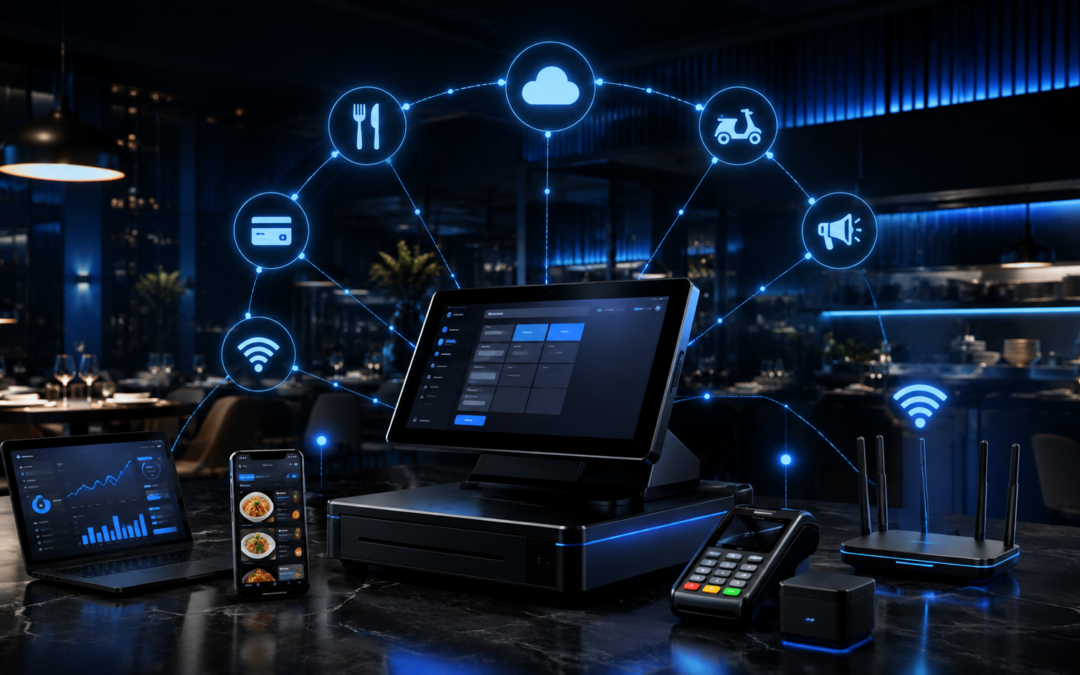
For restaurant owners and hospitality operators, technology decisions are rarely just technical. They affect point-of-sale, payments, online ordering, kitchen workflows, phones, Wi-Fi, reservations, delivery platforms, and local marketing. The right next step is not always a large project; it is often a focused conversation about what is working, what is getting in the way, and what deserves attention first.
A useful technology discussion begins with business priorities and real daily workflows. It should help leadership separate urgent problems from background noise, identify hidden dependencies, and understand where a modest improvement could create meaningful value.
Questions worth asking now
- Does every shift leader know what to do if a critical system fails?
- Are vendor contacts, accounts, devices, and support responsibilities documented?
- Is guest Wi-Fi separated from operational systems?
- Are local-search listings, menus, hours, and promotional campaigns accurate and measurable?
These questions are not a product checklist. They are a starting point for understanding risk, service quality, employee experience, customer expectations, and the organization’s ability to recover when something goes wrong.
Look for the friction employees have learned to tolerate
Recurring workarounds often reveal the best priorities. Slow access, duplicate entry, unclear ownership, unreliable equipment, confusing file sharing, missed follow-up, or a website that does not produce useful inquiries may feel ordinary only because the team has adapted to them.
Ask employees what interrupts their work, where they lose time, and what they worry about failing. Pair that feedback with a review of systems, vendors, security controls, renewals, and business goals. The combination usually produces a far more practical roadmap than a tool-first conversation.
Turn the conversation into a right-sized plan
A strong plan should identify a small number of priorities, the reason each matters, the person responsible, a realistic sequence, and the evidence that will show improvement. It should also account for training, documentation, ongoing support, and a fallback if a system or vendor becomes unavailable.
For restaurant owners and hospitality operators, the opportunity is a practical plan for reliable service, clear fallback procedures, and marketing that builds repeat demand. That may involve improving an existing system, simplifying several disconnected tools, strengthening basic safeguards, redesigning a customer-facing experience, or testing one carefully controlled automation.
What a 15-minute conversation can accomplish
A short introductory meeting is not enough to design an entire solution, but it is enough to clarify the main concern, identify likely dependencies, and decide whether a deeper review would be useful. Bring the issue that is creating the most friction, risk, or uncertainty. We will help frame the next questions and suggest a sensible direction.
Learn more about Grizzly Tech’s work with Restaurants.
Talk Through Your Restaurant Technology Plan
Choose a convenient time for a focused 15-minute conversation about what is slowing your team down, creating risk, or limiting growth.